

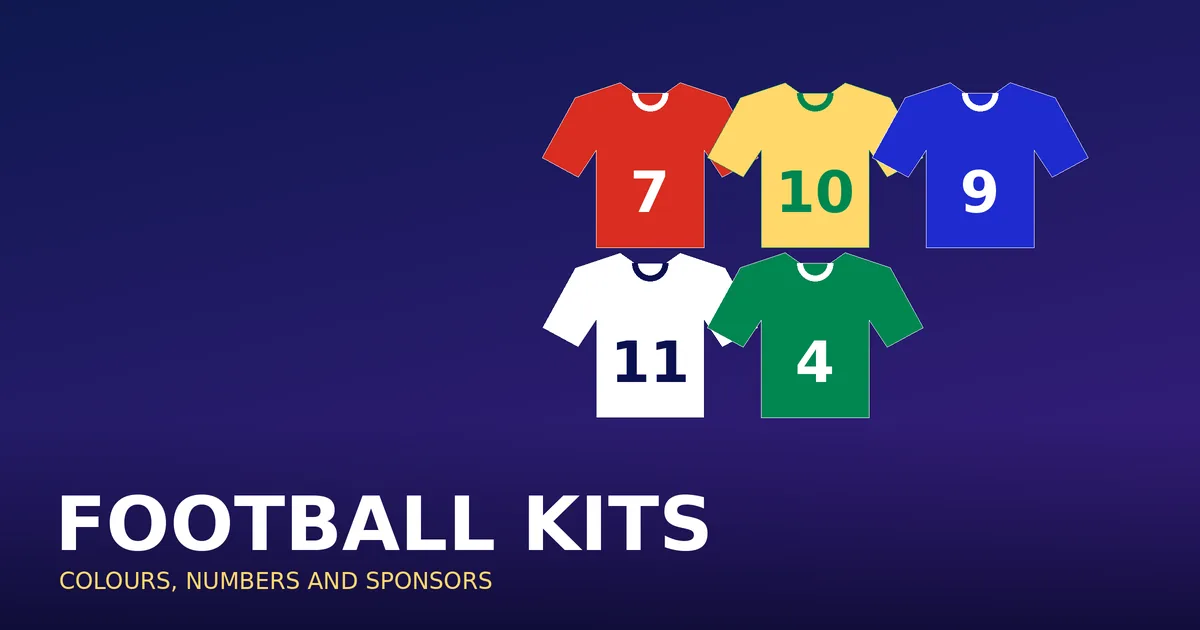
A football shirt is more than a piece of clothing. It is a flag, a memory and a fashion item. Fans wear their club’s colours to matches, to school and to church, and a new design can spark days of debate. Yet the football shirt did not always look like this.
This guide traces the history of kits, from the first plain shirts to numbers, names, sponsors and the replica shirts that millions of people buy every year, and it includes some of the stories behind famous colours.
The first kits
In the early days of football, players wore whatever they owned. Teams were often told to wear a certain colour of cap or sash to be recognised. Heavy cotton shirts, long shorts and leather boots were the standard. As the game grew, clubs adopted a set of colours, often because of a local tradition, a school, a church or a founder’s wish. Many colours still have simple origins. Everton’s blue, Arsenal’s red and Juventus’s black and white all come from decisions made more than a century ago.
Numbers and names
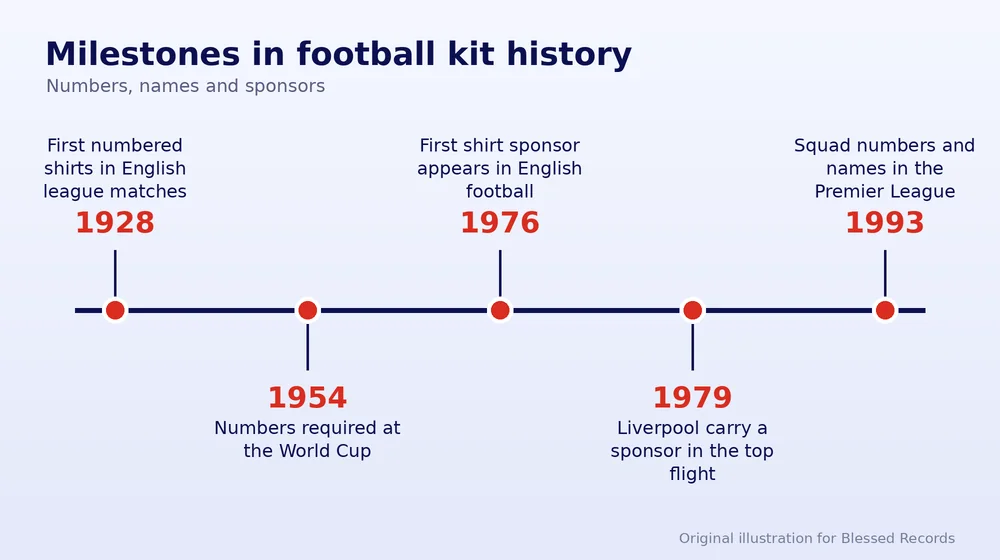
Numbers helped fans and referees tell players apart. On 25 August 1928, Arsenal and Sheffield Wednesday, and Chelsea and Swansea Town, wore numbered shirts in English league matches for the first time. The World Cup required numbers in 1954. Names on the back of shirts arrived much later. In the 1993 to 1994 season, the Premier League introduced fixed squad numbers and printed names on the back. Today, players often choose numbers that mean something to them, such as their age at their debut or a number worn by an idol.
Shirt sponsorship
Until the 1970s, the front of a football shirt was nearly always clean. That changed in 1976, when Kettering Town, then in the English Southern League, signed a deal to carry the name of a local tyre company. The English Football Association told them to remove it, but the rule was relaxed the following year. In 1979, Liverpool became one of the first big English clubs to wear a sponsor, with the Japanese electronics firm Hitachi, and soon almost every top club followed.
Broadcasters were unhappy at first, because they did not want to promote companies for free. Over time, television companies accepted sponsors, and shirt deals became one of football’s biggest income streams. Many clubs now also sell sponsorship on the sleeve, the training kit and the stadium.
The kit makers
The business of kit manufacturing began with a few companies. Umbro was a pioneer in England, and the German brothers Adolf and Rudolf Dassler founded Adidas and Puma in the late 1940s after splitting from a shoe business. Nike entered football seriously in the 1990s. A long deal with a major company can bring a club tens of millions a year. In return, the manufacturer sells replica shirts to fans.
The replica shirt boom
Fans have always wanted to look like their heroes. In 1973, Leeds United were among the first English clubs to sell replica kits in large numbers, and the habit spread. Selling shirts became a significant income stream for clubs in the 1990s, and it is now global. Shirts are also released in home, away and third versions, plus special editions for anniversaries and tournaments.
Famous stories behind colours and designs
- Brazil’s yellow: Brazil once played in white shirts. After the national loss to Uruguay in the 1950 World Cup, a newspaper held a competition to design a new strip. The winner, a young designer named Aldyr Schlee, created the yellow shirt with green trim that is now one of the most recognisable kits in the world.
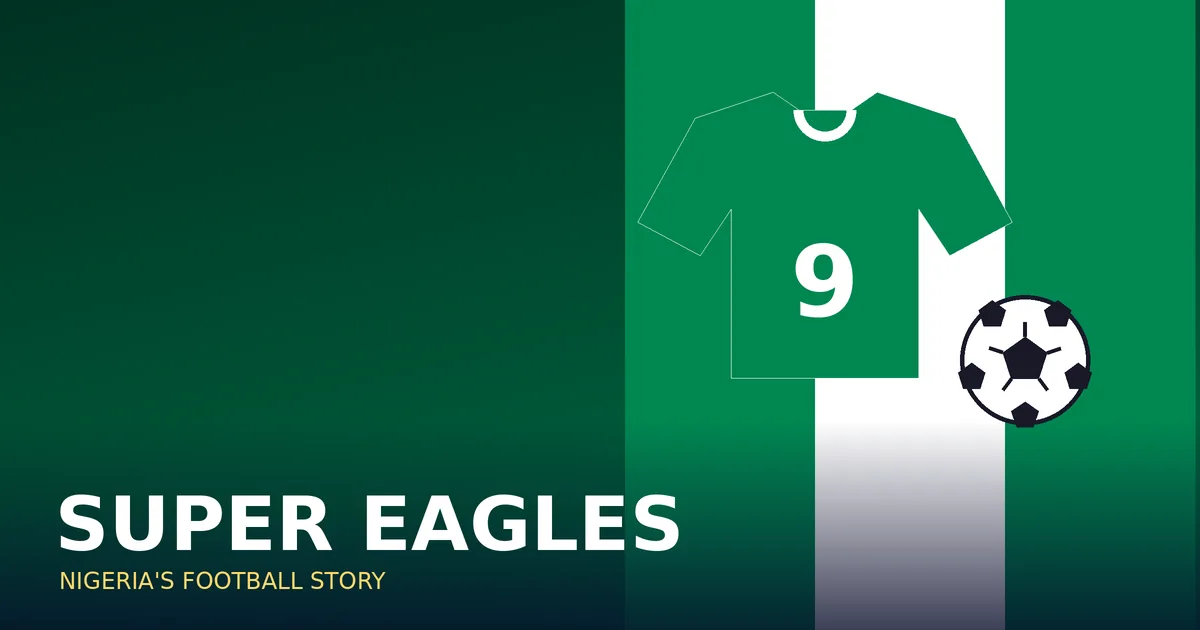
- Nigeria’s 1994 jersey: The Super Eagles’ green and white design from the 1994 World Cup, with its bold patterns, is still seen as one of the finest kits ever made. In 2018, Nigeria’s new kit produced by Nike was praised around the world and sold out quickly, showing the strong link between football and fashion.
- Argentina’s stripes and Dutch orange: Colours that fans recognise at once, even without a badge.
Goalkeeper kits and third kits
Goalkeepers wear a different colour from outfield players so that referees and teams can tell them apart, and for many years their kits were plain green, grey or black. In the 1990s, goalkeepers began wearing bold, bright designs, and today their kits are a fashion statement. Clubs also release third kits, which are used when both the home and away shirts could clash with the opponent’s colours, and many fans collect them as souvenirs.
How a new kit is made
A new kit is usually planned more than a year ahead. The manufacturer and the club decide on a concept, which could be a tribute to an old shirt, the club’s city or a local culture. Designers sketch patterns, test fabrics, make samples and adjust details such as collars, badges and colours. The kit is launched with a video, and sometimes fans are invited to vote or share ideas. Some of the most popular designs are those that connect to a club’s story, such as a pattern inspired by the old stadium or a local landmark.
Football shirts as fashion and culture
Football shirts are now worn far away from stadiums. In Nigeria, jerseys of the national team and of European clubs are seen at weddings, in markets, in schools and on social media. Musicians wear them in videos, and designers use retro football patterns in their collections. A shirt can say where you come from, who you support and which era you remember best, which is why old shirts from the 1990s are so popular with collectors.
Fabrics and sustainability
Kits have changed greatly in material. Heavy cotton gave way to lighter synthetic fabrics designed to absorb sweat and keep players cool. In recent years, several manufacturers have made shirts from recycled plastic bottles and other recycled material, and clubs and federations are under pressure to reduce the environmental impact of making and shipping so many shirts.
How to buy a genuine shirt
Fake shirts are a large problem. To avoid being cheated, buy from the club’s official shop, the manufacturer’s website or a recognised retailer. Check the tags, the stitching and the quality of the badge, and be careful if the price looks far too low. A genuine shirt usually has a detailed label, a security tag or a hologram, and good printing. Supporters also help clubs by buying official products, because part of the money goes to the team.
Key takeaways
- Numbered shirts were first used in English league matches in 1928, and squad numbers and names arrived in the Premier League in 1993.
- Shirt sponsorship began in the English game in the late 1970s and is now a major source of income.
- Brazil’s yellow shirt was designed after a competition held following the 1950 World Cup.
- Nigeria’s 1994 and 2018 kits are celebrated around the world.
- Always buy shirts from official sellers to avoid fakes.
Frequently asked questions
When did footballers first wear numbers?
On 25 August 1928, in English league matches involving Arsenal and Chelsea. Numbers became compulsory at the World Cup in 1954.
Who made the first shirt sponsorship deal?
Kettering Town signed an early deal in 1976, although the English FA made them remove it at first. Liverpool carried a sponsor from 1979.
Why does Brazil wear yellow?
After a heavy loss in the 1950 World Cup, Brazil decided to replace their white shirt. A competition produced the yellow shirt with green details that is still used today.
How can I tell if a football shirt is fake?
Check the label, stitching, badge and printing quality, and buy from official shops. A price that is far lower than usual is often a warning sign.
Keep reading

About this article. Written by the Blessed Records Exclusive Entertainment editorial team from published football history and official records. The images are original illustrations made for this site. We update our guides when facts change. If you spot a mistake, please contact us and we will check it.