

Millions of people live where fibre cables and mobile masts do not reach, or where the connection is slow and unreliable. Starlink, owned by SpaceX, tries to solve that by sending internet down from space.
This guide explains how Starlink works, how big it has become, what it means for Nigeria and where it is heading.
How Starlink works
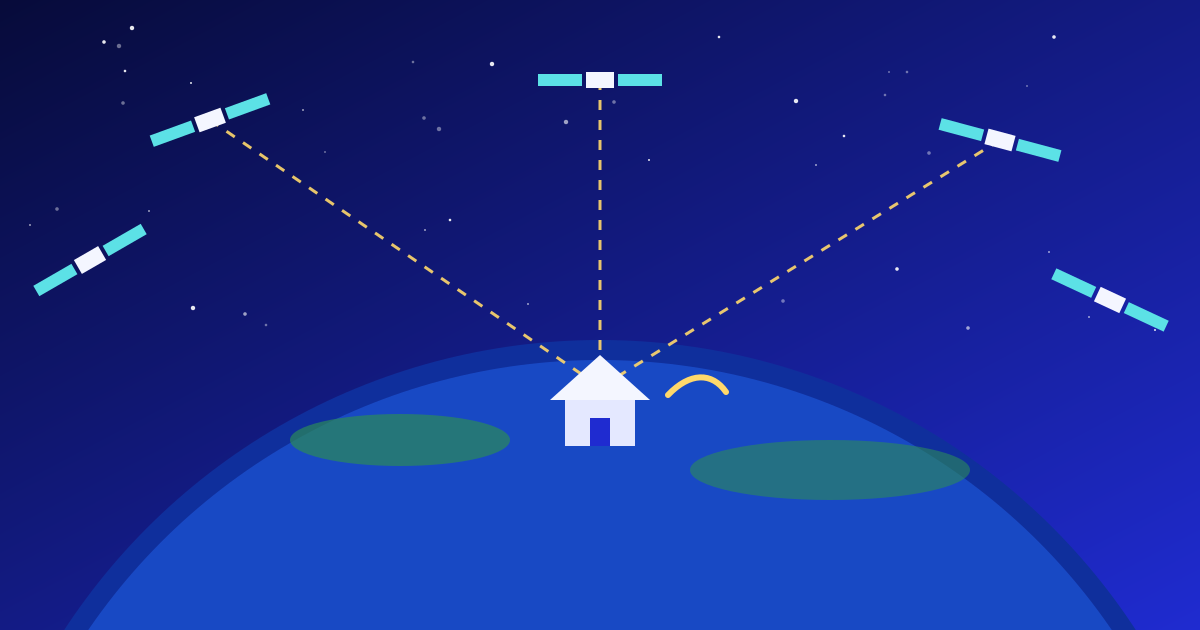
Old satellite internet used a few large satellites very far from Earth, about 36,000 kilometres up. The signal took so long to travel that web pages and video calls felt slow. Starlink uses thousands of small satellites in low Earth orbit, roughly 550 kilometres up, so the signal travels a much shorter distance.
A customer places a dish, sometimes called a terminal, with a clear view of the sky. The dish tracks satellites as they cross the sky and passes data to a router. The satellites connect to ground stations, and many also pass data to each other with lasers. Because the satellites move, the dish keeps switching to the next one, like a relay race.
Starlink timeline at a glance
- 2018: First test satellites launch.
- May 2019: The first batch of 60 satellites goes up.
- 2020: Early customers begin testing the service.
- 2023: Service starts in Nigeria.
- December 2025: Airtel Africa and SpaceX announce a direct-to-phone partnership.
- February 2026: More than 9,700 satellites are working.
- September 2026: About 13.6 million customers are reported.
How big Starlink is in 2026
The first test satellites flew in 2018, and the first big batch of 60 went up in May 2019. By February 2026 more than 9,700 Starlink satellites were working in orbit. Industry reports say Starlink reached about 13.6 million customers by the end of September 2026, up from around 9 million at the end of 2025.
Besides homes, Starlink serves ships, aircraft, remote clinics, schools, emergency teams and the military. Its Starship rocket is expected to launch bigger, more powerful satellites, called Version 3.
Starlink in Nigeria
Nigeria was the first African country to get Starlink service, which began in 2023. According to the Nigerian Communications Commission, Starlink had about 98,600 active internet subscriptions in the second quarter of 2026, close to the leading fixed wireless operator Spectranet, which had about 111,400.
Price is the main barrier. A dish and a monthly plan cost far more than a typical mobile data plan, so most customers are businesses, schools, offices, oil and gas sites and well-off homes. Plans and prices change often, so always check Starlink’s own website.
Direct-to-phone service
The next step is “Direct to Cell,” which lets ordinary phones connect to satellites without a dish. In December 2025 SpaceX and Airtel Africa announced a partnership to bring this to 14 African markets and about 174 million customers, including Nigeria. It starts with basic services such as text messages in places with no mobile signal, and depends on approval from each country’s regulator.
This could matter for rural communities, farmers and travellers on roads where networks drop out, but it will not replace normal towers in cities.
Practical advice before you buy
Check coverage and the current price on Starlink’s official website, and compare it with local fibre, fixed wireless or mobile data plans. Starlink is most worth the cost where the other options are poor.
Remember that the dish needs steady power, so plan for an inverter or solar set-up if your electricity is unreliable. Place the dish where nothing blocks the sky, such as trees or tall walls, and buy only from Starlink itself or an authorised seller to avoid fake or stolen kits.
Limits and concerns
Starlink is not perfect. Speeds can drop when many users share one area, heavy rain and trees can block signals, and the service costs more than most local options. Astronomers worry about bright satellites, and some governments worry about one company controlling so much connectivity.
Still, Starlink shows how quickly satellites can reach places that cables may take decades to reach.
Key takeaways
- Starlink uses thousands of satellites about 550 km up, so delay is far lower than old satellite internet.
- By February 2026 more than 9,700 satellites were working, and reports say about 13.6 million customers by September 2026.
- Nigeria has had Starlink since 2023, and about 98,600 active subscriptions were reported for Q2 2026.
- Airtel Africa and SpaceX plan direct-to-phone coverage, subject to regulator approval.
- Cost, crowding and weather are the main limits.
Frequently asked questions
Do I need a dish to use Starlink?
For home broadband, yes. A dish with a clear view of the sky is needed. Direct to Cell is a separate service meant for ordinary phones.
Is Starlink faster than fibre?
Usually not. Fibre is generally faster and cheaper where it exists. Starlink is most useful where fibre or good mobile networks are missing.
Is Starlink legal in Nigeria?
Yes. It operates under a licence from the Nigerian Communications Commission, which also publishes subscriber figures.
Keep reading
How SpaceX learned to land rockets, carry astronauts and build Starship, the biggest rocket ever flown.
The story of Grok, the Colossus supercomputers and how Elon Musk’s AI company became part of SpaceX.
One simple map of Elon Musk’s businesses, from his first company to the 2026 SpaceX merger.
About this guide. Written by the Blessed Records Exclusive Entertainment editorial team from company announcements, regulator figures and news reports, with facts checked up to 2 November 2026. Technology news moves fast, so some details may change. If you spot a mistake, please contact us. This guide is for information only and is not financial or investment advice.