

Women have played football for well over a century. In some years, their matches drew bigger crowds than men’s matches. Then governing bodies stepped in, and for decades the women’s game was held back. Its comeback in recent decades is one of the biggest stories in modern sport.
This guide explains where women’s football began, how it was banned in England, how it returned, and where it stands today, including the story of Nigeria’s Super Falcons.
The early years
Women were kicking balls long before they were allowed in official competitions. The first reported women’s matches took place in Scotland and England in the 1880s. The game took off during the First World War, when women worked in factories while men were at the front. Factory teams played charity matches to raise money for wounded soldiers.
The Dick, Kerr Ladies
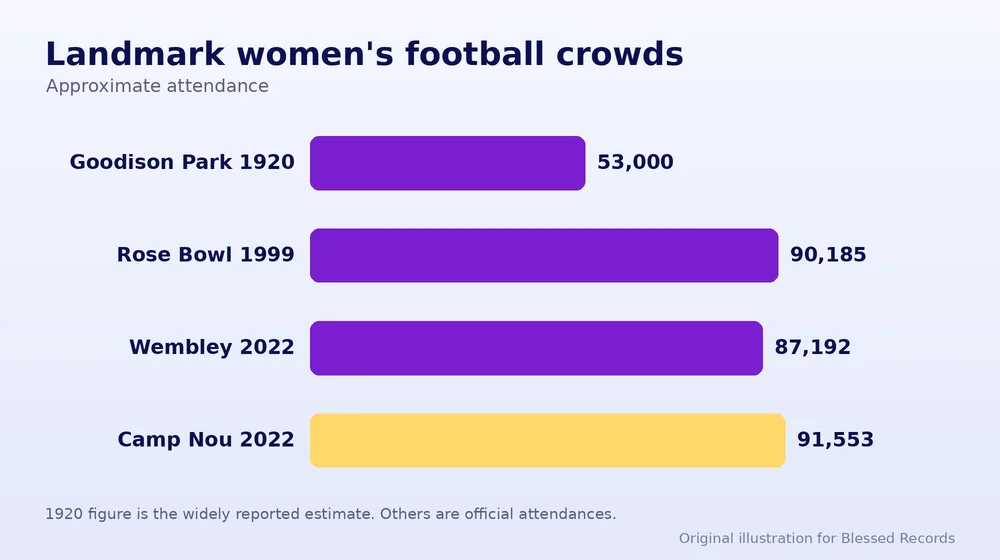
The most famous team was Dick, Kerr Ladies, formed in 1917 by women who worked at a munitions factory in Preston, England. Their star player was Lily Parr, who joined as a teenager and was known for her powerful left foot. On Boxing Day 1920, the team played St Helens Ladies at Goodison Park in Liverpool, and an estimated 53,000 people attended, with thousands more turned away at the gates. The match raised money for ex-servicemen and showed how popular women’s football had become.
The 1921 ban
Not everyone was pleased. On 5 December 1921, the Football Association in England banned women’s teams from playing on the grounds of its member clubs. It said that football was “quite unsuitable for females” and should not be encouraged. Without access to stadiums and pitches, the women’s game lost its audience and its funding.
The ban lasted for 50 years. During that time, women kept playing on parks and in small leagues, and other countries began their own women’s competitions. The English ban was finally lifted in 1971, and the Women’s Football Association had already been formed in 1969.
The comeback
- 1970s: Women’s football began to organise at national and international level. In the United States, a law known as Title IX, passed in 1972, required schools and colleges to give equal sporting opportunities to women, which helped a huge number of girls to play football.
- 1991: FIFA held the first Women’s World Cup in China. The United States won. Nigeria represented Africa and has qualified for every tournament since.
- 1996: Women’s football became an Olympic sport at the Atlanta Games.
- 1999: A crowd of 90,185 filled the Rose Bowl in California to watch the United States beat China on penalties in the World Cup final.
The Super Falcons and women’s football in Africa
Africa’s women’s game has grown quickly. The first Women’s Africa Cup of Nations was played in 1991, and the Nigeria women’s team, the Super Falcons, won it so many times that they have more titles than any other country. In July 2025, Nigeria came back from two goals down to beat hosts Morocco 3-2 in the final of the latest tournament. Nigerian players such as Asisat Oshoala have also won the African women’s player of the year award several times and played for top European clubs.
The modern boom
- 2018: Ada Hegerberg won the first women’s Ballon d’Or.
- 2022: England won the Women’s Euros, beating Germany 2-1 at Wembley in front of 87,192 people. FC Barcelona’s women’s team played in front of 91,553 supporters at the Camp Nou in a Champions League semi-final.
- 2022: The United States women’s team reached an agreement with its federation to receive equal pay with the men’s national team.
- 2023: Spain won the Women’s World Cup, beating England 1-0 in Sydney.
- 2025: England won the Women’s Euros again, beating Spain on penalties in the final in Switzerland.
Leagues, clubs and the Champions League
A string of professional leagues has appeared since the 2010s. The National Women’s Soccer League started in the United States in 2013, and the Women’s Super League in England turned fully professional from 2018. Spain’s top league, now called Liga F, attracts huge crowds for its biggest matches. In 2021, UEFA introduced a group stage and a larger commercial package for the Women’s Champions League, which helped increase prize money and television coverage. Clubs such as Barcelona, Lyon, Chelsea, Arsenal and Wolfsburg have become powers in the women’s game.
How girls and women can get involved
You do not have to be a professional to be part of women’s football. Many clubs and schools have girls’ teams at different levels, and organisations in Nigeria and across Africa run community programmes and tournaments. Women can also build careers as coaches, referees, physiotherapists, analysts, journalists and club managers. National associations run courses for coaching and refereeing, and the number of qualified female coaches and referees is increasing each year.
The challenges that remain
Women’s football is growing, but it faces real problems. In many countries, players are paid far less than men, or not at all. Facilities and medical care can be poor, safeguarding failures have been exposed in some leagues, and media coverage is still smaller than for men’s football. In Nigeria and across Africa, players have sometimes protested about unpaid wages and bonuses.
Role models and local leagues
The Super Falcons have become role models for girls across Nigeria, and the national women’s league and state competitions give players a place to develop. Their success on the continent shows how much talent exists, and many supporters say the team deserves the same level of backing, pay and facilities as the men’s side. Every record crowd and every trophy helps persuade parents, schools and sponsors to take girls’ football seriously.
What happens next
The next Women’s World Cup will take place in Brazil in 2027, the first in South America. Clubs, sponsors and broadcasters are investing more, and each year new records are set for crowds and television audiences. If investment continues and players are treated fairly, the women’s game has the potential to become one of the biggest sports in the world.
Key takeaways
- Women’s football was hugely popular in England after the First World War, with crowds of up to 53,000.
- The English FA banned women from its grounds in 1921, and the ban lasted until 1971.
- The first FIFA Women’s World Cup was held in 1991, and the Olympic tournament began in 1996.
- Nigeria’s Super Falcons are the most successful team in the Women’s Africa Cup of Nations.
- Record crowds today show the game’s huge potential, but pay and facilities still need to improve.
Frequently asked questions
Why was women’s football banned in England?
In 1921, the FA said the game was unsuitable for women and refused to let them use the grounds of its member clubs. Many historians believe the popularity of women’s matches also worried the men’s game.
Who was Lily Parr?
A Dick, Kerr Ladies star who joined the team as a teenager and became one of the first big names in women’s football. She played for more than 30 years.
When was the first Women’s World Cup?
1991, in China. The United States won.
How many times have the Super Falcons won the Women’s Africa Cup of Nations?
Nigeria has won the competition more often than any other country, including a 3-2 final win over Morocco in July 2025.
Keep reading



About this article. Written by the Blessed Records Exclusive Entertainment editorial team from published football history and official records. The images are original illustrations made for this site. We update our guides when facts change. If you spot a mistake, please contact us and we will check it.