- Sync means your music is paired with pictures, such as films, series, adverts, games and online videos.
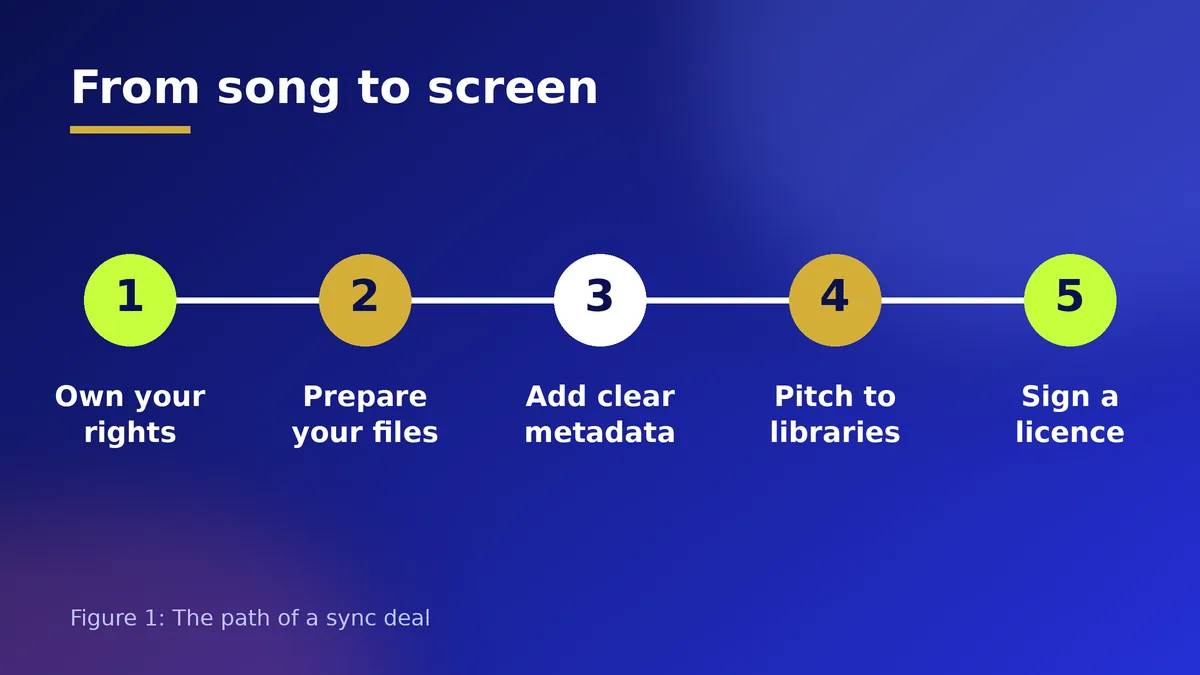
- Own and control your rights first: songwriters, producers and featured artists must agree.
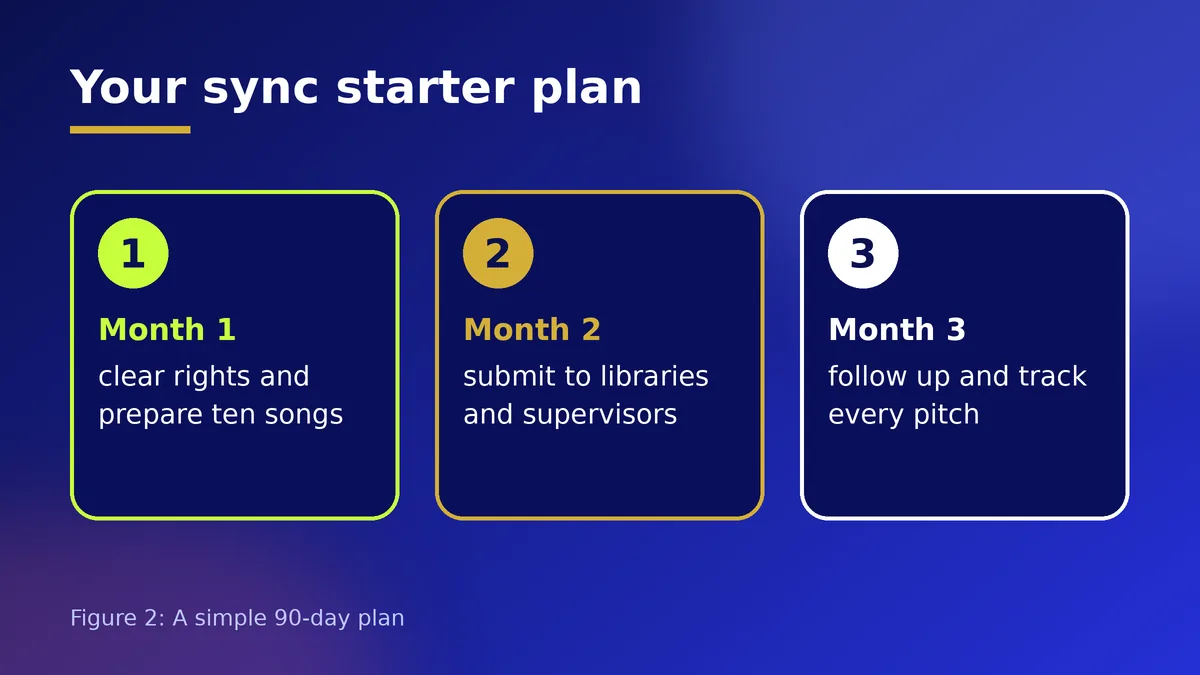
- Prepare clean files, clear metadata and instrumentals, then approach music libraries and supervisors professionally.
The Short Answer
When a song plays in a film, an advert, a game or an online video, someone had to get permission and usually pay. That permission is called a synchronisation licence, or sync licence, because the music is synchronised with images. For independent artists it can be a valuable extra income stream, and one placement can also bring new listeners.
It is competitive and not guaranteed. The artists who succeed treat it like a business: their rights are clear, their files are ready and they pitch regularly.
Two Rights You Must Understand
Every recorded song has two main parts. The composition is the song as written, meaning melody and lyrics. The master is the specific recording. A sync user usually needs permission for both: a sync licence from whoever controls the composition and a master use licence from whoever controls the recording.
If you wrote and recorded the song and have no co-writer or label with a claim, clearing both can be quick. If a producer, featured artist or label has a share, you need their agreement in writing. Songs with unclear ownership are usually rejected.
Prepare Your Songs
Supervisors search in a hurry, so make their work easy. Prepare a high-quality master, an instrumental version, a version without lead vocals if possible, and shorter edits. Name files clearly and keep lyrics, split sheets and contact details together.
Add accurate metadata: genre, mood, tempo, instruments, language and a short description. Songs that are easy to find and easy to clear are used more often. Avoid uncleared samples completely.
Where to Pitch
Music libraries and sync agents represent catalogues to film, television, advertising and digital clients. Some are exclusive, some are non-exclusive, and their terms differ. Read every contract carefully, check the length of the deal, the territory, the revenue split and whether you can still license the song elsewhere.
Build a short list of music supervisors, video producers and advertising agencies that fit your sound. Send a polite message with a link to a small, curated selection of songs, not your whole catalogue. Nigerian filmmakers, content creators and brands also need licensed music, so local deals are a good place to start.
Collecting What You Are Owed
Sync fees are one part of the income. When a work is broadcast or performed publicly, performance royalties may also be due through the collecting society that represents you. In Nigeria, check which organisations you need to register with, and register your songs so they can be tracked.
Keep a simple spreadsheet of songs, rights holders, pitches, licences, fees and payment dates.
Mistakes to Avoid
Do not sign away rights you do not understand. Do not hand the same song to two exclusive deals. Do not pay anyone who promises guaranteed placements. And do not use another artist's music or samples without clearance. If a contract feels unclear, get advice from an entertainment lawyer or a music-industry body before you sign.
Action Checklist
- List every writer, producer and rights holder for each song
- Sign split sheets in writing
- Prepare masters, instrumentals and short edits
- Add accurate metadata to every file
- Pitch a small curated list to libraries and supervisors
- Read every contract and track every pitch
Frequently Asked Questions
Do I need a label or publisher to get sync deals?
No, but you need to control the rights. If you wrote and own both the composition and the master, you can license directly or through a library. Always read contracts carefully.
Are samples a problem for sync?
Yes. Uncleared samples usually mean the song cannot be licensed. Use original material or clear every sample in writing before you pitch.
How much can one placement pay?
It varies widely with the project, the use, the territory and the length of the licence, and many placements pay little or nothing upfront. Treat sync as one income stream, not a promise.