- Promises of guaranteed or unusually high returns are the biggest warning sign.
- Check that the company and the person selling are registered with the proper regulator.
- Never invest because of pressure, secrecy or a promise to recruit others.
The Short Answer
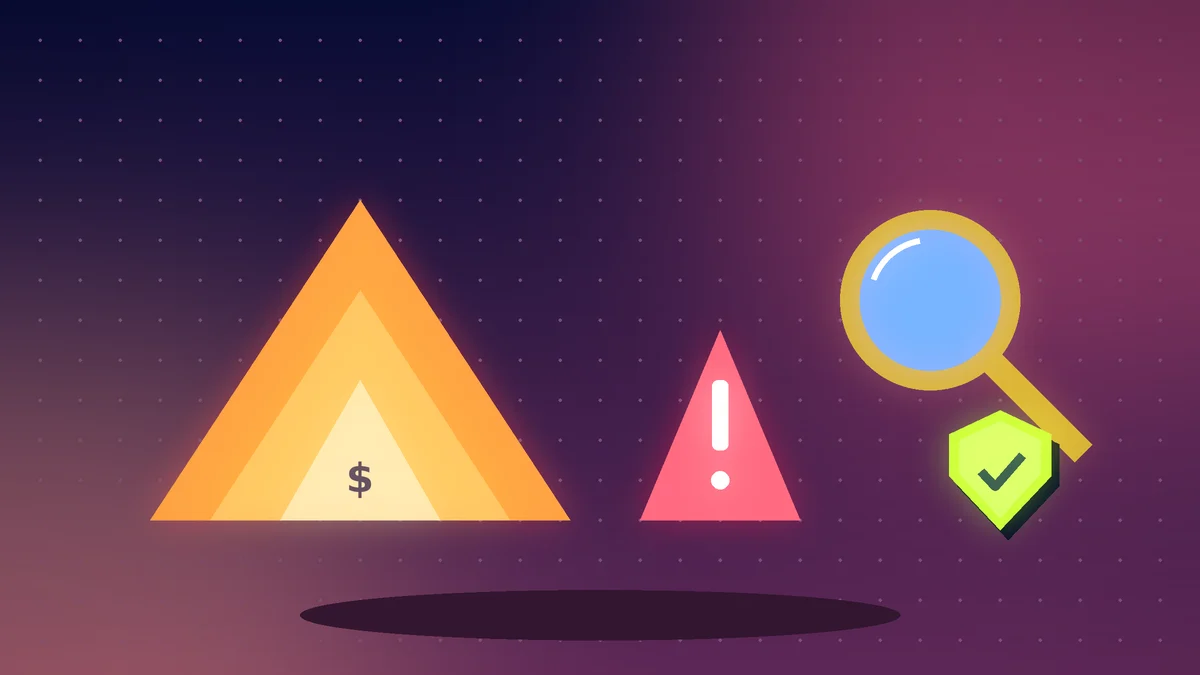
If an investment promises high returns with little or no risk, treat it as a warning. Real investments carry risk, and genuine returns vary. Ponzi and pyramid schemes pay early members using money from new members, and they collapse when the new money stops. Before you invest, verify who is selling it, whether they are licensed and how the money really earns a profit. This is general information, not legal or financial advice.
Common Warning Signs
| Warning sign | Why it is a problem |
|---|---|
| Guaranteed or very high returns | No real investment can promise this |
| Pressure to invest quickly | Scammers want you to act before you check |
| Pay more by recruiting others | The money comes from new members, not real profit |
| Secret or complicated strategy | If they cannot explain it simply, be careful |
| Not licensed or registered | You have little protection if it fails |
| Payment to a personal account or in crypto only | Hard to trace and recover |
| Paying out early profits to build trust | Classic way to draw in bigger deposits |
How to Check Before You Invest
Search for the company on your country's securities or financial regulator website. Check the name of the person selling and whether they are authorised. Look for official warnings and independent reviews, and ask for clear written terms. Speak to a trusted, licensed adviser. If the offer is only on social media or a messaging group, be extra careful.
Ask the Hard Questions
Where exactly does the profit come from? Who holds my money? Can I withdraw at any time, and are there fees? What happens if the company fails? Is my money protected in any way? A real provider answers clearly and does not get angry at questions.
Protect Yourself
Do not share bank details, passwords or one-time codes. Use unique passwords and two-factor authentication, as in our guide to phishing and SIM swap fraud. Never borrow to invest in a scheme. Learn how normal investing works first, with our guide to index funds and ETFs.
Online Romance and Impersonation Scams
Some scammers build a friendship online, then offer an investment tip. Others pretend to be known brands, celebrities or officials. Do not send money to someone you have not met and checked. Verify messages through official websites and phone numbers.
If You Have Been Targeted
Stop paying, keep screenshots and receipts and contact your bank immediately. Report the scheme to the police and your financial regulator. Warn others. Be careful of “recovery” services that ask for upfront fees, since they are often another scam.
Common Mistakes to Avoid
Trusting a scheme because friends or family joined, reinvesting early payouts, keeping quiet out of embarrassment and sending more money to “unlock” withdrawals are the most common errors. Always get help quickly if something feels wrong.
Frequently Asked Questions
Are all crypto investments scams? No, but many scams use crypto. Verify the platform and never invest what you cannot afford to lose.
Can I get my money back? Sometimes, especially if you report quickly, but recovery is not guaranteed.
How can I check registration? Search your country's securities or financial regulator website or ask them directly.
What if a friend recommended it? Friends can be victims too. Verify the scheme yourself.
Action Checklist
- Never invest because of pressure or promised guaranteed returns
- Check the company and seller with your financial regulator
- Ask where the profit comes from and read written terms
- Avoid schemes that reward you for recruiting others
- Pay only through traceable, official channels
- Do not borrow money to invest
- Report suspicious schemes to your bank and the authorities