
- Know exactly what rights you give up and for how long.
- Understand advances, recoupment and royalty rates before you sign.
- Always get independent legal advice on any deal.
The Short Answer
A record deal can bring funding, expertise and reach, but it can also tie up your music for years on unfavourable terms. The best protection is understanding the common deal types and having a lawyer review any contract. This is general information, not legal advice.
Common Types of Deals
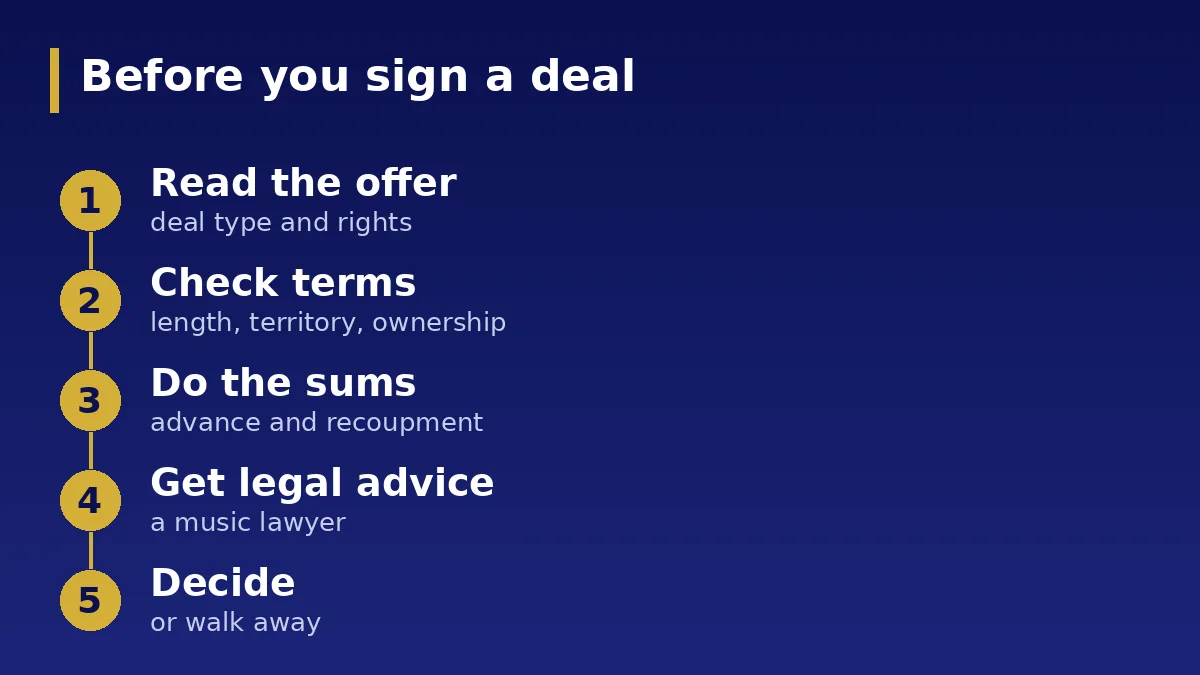
A traditional label deal usually gives the label rights to your recordings in return for funding and promotion. A distribution deal places your music on platforms for a fee or share while you keep ownership. A licence deal lets the label use your music for a limited period. Some deals cover more than recordings, such as live and merchandise income.
Ask the label which type it is offering and what it covers.
Advances and Recoupment
An advance is money paid up front against your future earnings. The label usually recoups it, and often some costs, from your share before you receive royalties. Ask which costs are recoupable, such as videos and promotion, and whether they are charged at cost.
Make sure you understand when you start to be paid.
Rights, Term and Territory
Check who owns the masters, how long the label holds the rights and in which countries. A shorter term, or rights returning after a set number of years, gives you more control.
Ask about options for the label to extend the deal and what you receive if the label stops promoting your music.
Royalty Rates and Accounting
Compare the percentage you receive with other offers. Ask how often you are paid, what statements show and whether you can audit the label records. Clear accounting protects you.
Keep your own record of streams, sales and shows to check against statements.
Warning Signs and Alternatives
Be careful if you are pressured to sign quickly, if the label refuses to let a lawyer see the contract, or if terms are unclear about ownership. Compare the offer with self-release, distribution deals and smaller partnerships.
Walking away from a bad deal is often better than a long, difficult one.
A Simple Example
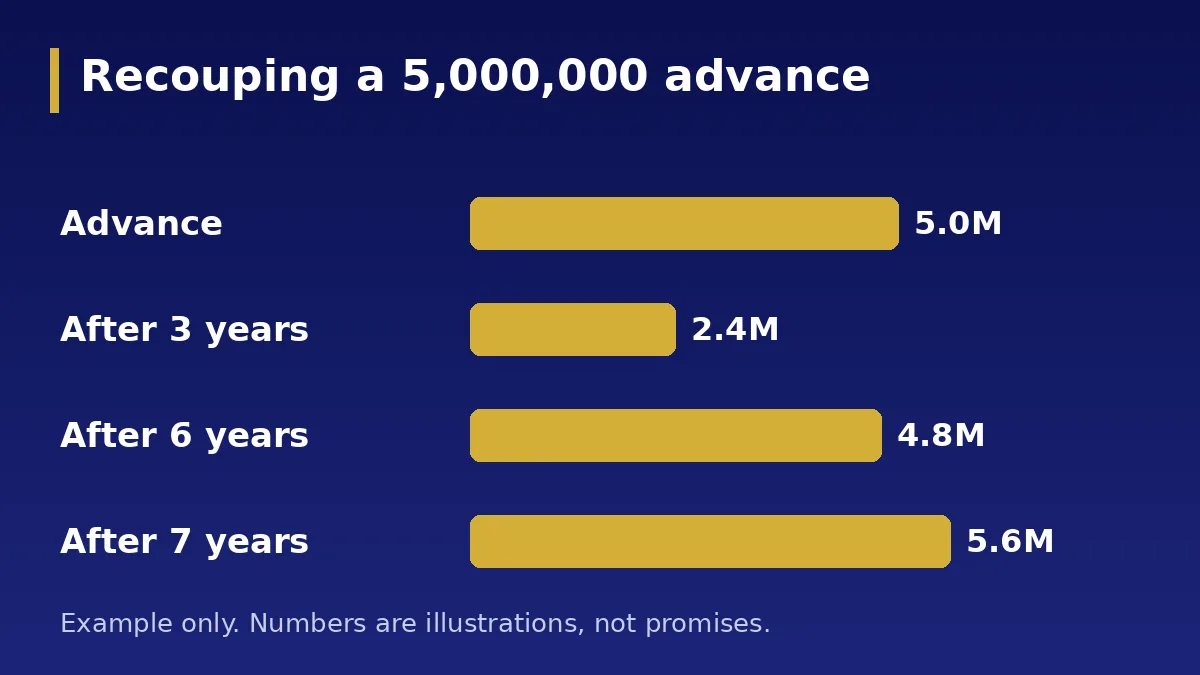
Imagine a label pays an advance of 5,000,000 naira and recoups it from your royalty share. If you earn 800,000 a year from your share, it takes more than six years before you see any royalty cash, and costs added along the way can make it longer. Always calculate how long recoupment could take under realistic earnings.
Questions to Ask the Label
Ask who decides release dates and marketing, what happens if the label does not release your album, whether you can still perform and sell merchandise, and how disputes are resolved. Ask for answers in writing before you sign.
Before You Sign
Compare at least two options, speak to other artists who worked with the label and take time to review the contract with a music lawyer. A good partner will answer questions openly and let you take the time you need.
Action Checklist
- Ask what type of deal is being offered
- Understand advances and which costs are recoupable
- Check who owns the masters and for how long
- Compare royalty rates and accounting terms
- Have a music lawyer review the contract
- Compare with self-release or distribution options