


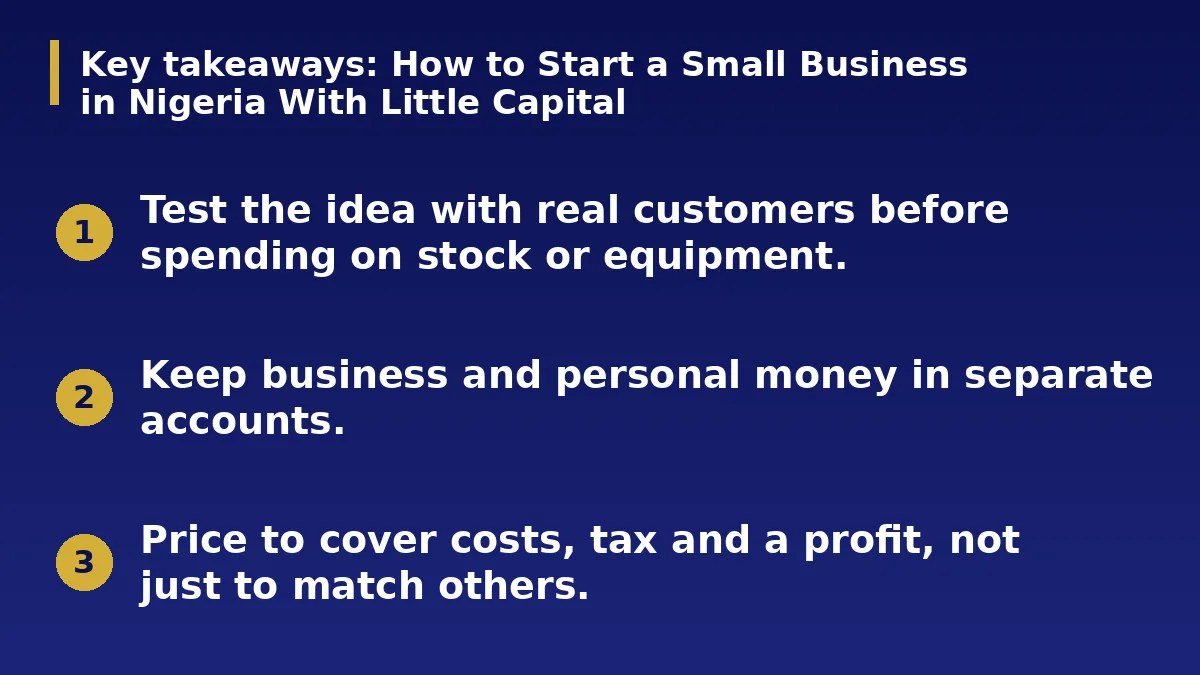
- Test the idea with real customers before spending on stock or equipment.
- Keep business and personal money in separate accounts.
- Price to cover costs, tax and a profit, not just to match others.
The Short Answer
You do not need a large sum to begin. You need a clear customer, a simple offer and tight control of costs. Start small, learn from real sales and grow with the profit the business earns.
Choose a Simple Idea
Look for a problem people around you already pay to solve, such as food, cleaning, repairs, tutoring, delivery, beauty or printing. Services need less capital than stock-based businesses.
Pick something you can deliver well with your current skills and time. Talk to ten possible customers about what they would pay for.
Test Before You Spend
Make a small first batch or offer a trial service. Sell to friends, neighbours and a local online group, and ask for honest feedback. Note what sells, what does not and what customers ask for.
Spend only on what you need for the first sales. Rent or borrow equipment where you can.
Work Out Your Prices and Costs
List every cost: materials, transport, data, packaging, your time and a share of overheads. Add tax and a profit margin. A price that only matches a competitor may leave you with no profit.
Track each sale and expense in a simple notebook or spreadsheet from the first day.
Register and Separate Your Money
Registering a business name with the Corporate Affairs Commission can help you open a business account, win larger customers and build trust. Check the current steps and fees on the official site.
Open a separate account, pay yourself a fixed amount and leave the rest in the business.
Grow Carefully
Reinvest part of each profit in the thing that earns the most. Keep a small cash buffer for slow weeks. Ask customers for referrals and reviews.
Hire help or borrow only when sales are steady and you understand your costs.
A Worked Example
Suppose you start a snack business with 50,000 naira. Ingredients and packaging for one batch cost 12,000 and sell for 20,000, so the gross profit is 8,000 before data, transport and your time. Selling two batches a week gives about 64,000 a month before costs.
Track your real numbers for a month, then decide whether to grow, raise prices or change the product.
Mistakes to Avoid
Do not buy a lot of stock before you have customers. Do not mix your own spending with business money. Do not copy a competitor price without knowing your own costs.
Avoid offers that ask you to pay to join a business scheme promising quick returns.
Action Checklist
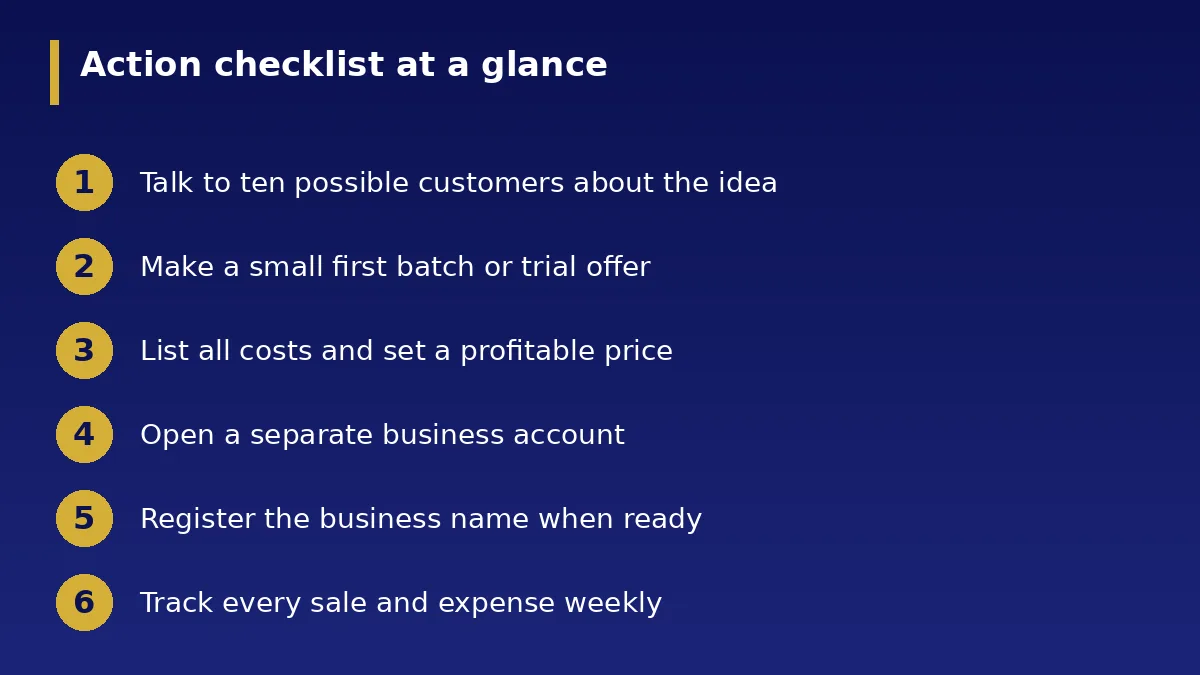
- Talk to ten possible customers about the idea
- Make a small first batch or trial offer
- List all costs and set a profitable price
- Open a separate business account
- Register the business name when ready
- Track every sale and expense weekly