


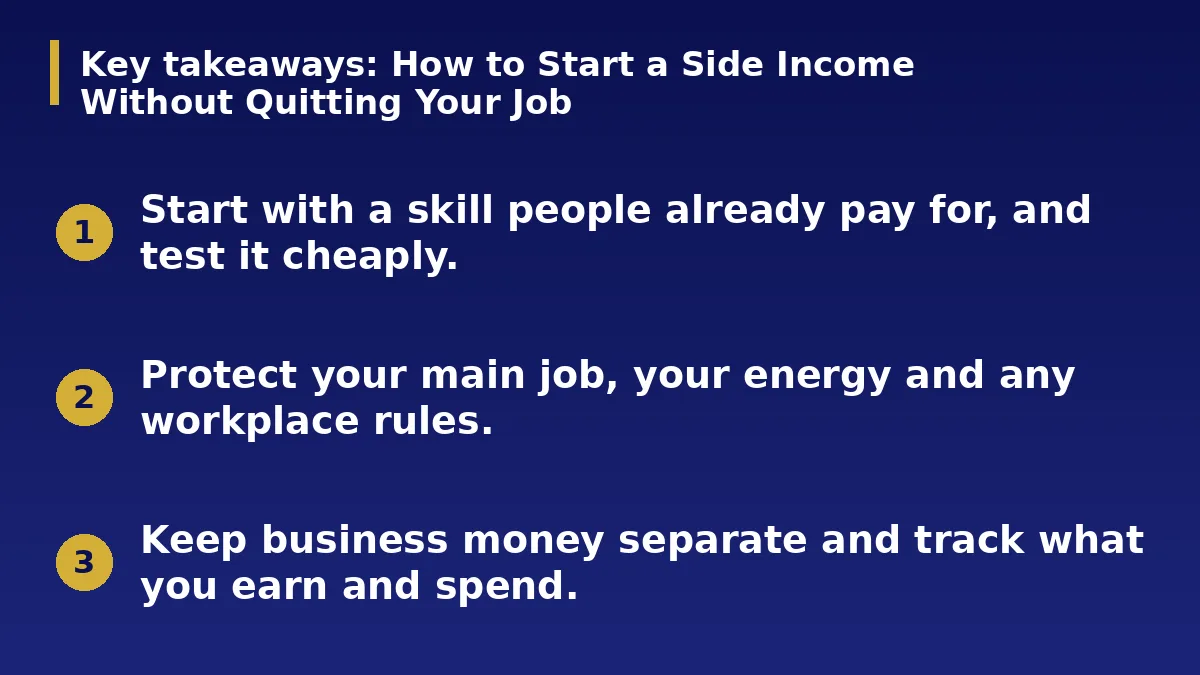
- Start with a skill people already pay for, and test it cheaply.
- Protect your main job, your energy and any workplace rules.
- Keep business money separate and track what you earn and spend.
The Short Answer
A side income can add stability and open new options, but it works best when it starts small. Choose something you can do in limited hours, test it with real customers and grow only when it proves itself.
Choose an Idea
List your skills, such as writing, design, tutoring, repairs, cooking, photography or social media help. Look for problems people nearby already pay to solve. A service needs less money to start than a product.
Check the rules at your main job on outside work, and avoid anything that creates a conflict of interest.
Test Before You Spend
Offer the service to a few people at a fair price and ask for honest feedback. Keep costs low and avoid buying equipment or stock before you have paying customers.
Write down what you did, what it cost and what you earned so you can judge the results.
Manage Your Time and Energy
Set fixed hours, such as two evenings and one weekend slot. Treat the work like an appointment. Burnout destroys more side projects than lack of ideas.
Tell family and friends when you are working so they can support you.
Handle the Money
Open a separate account for the business so income and expenses are clear. Set aside part of each payment for tax and for growth. Find out whether you need to register a business name or pay tax on this income.
Review monthly. If demand and income grow steadily, you can raise prices or add a helper.
Ideas That Often Work
Skills-based services such as tutoring, writing, graphic design, bookkeeping, photography, hair and makeup, repairs and event help can start with little money. Selling products, such as snacks or crafts, can work if you test demand first.
Choose something you can deliver reliably in your available hours.
Find Your First Customers
Tell friends, family and colleagues what you offer. Share examples of your work and ask for honest reviews. Join local groups and online communities where your customers spend time.
Deliver your first jobs well and ask satisfied customers to recommend you. Word of mouth is often the cheapest marketing.
Know When to Grow
If demand exceeds your time, raise prices, limit your hours or bring in help. Reinvest part of your profit in tools and training. Consider whether it could become a full business only after your income is steady and you have savings.
Keep your main job until the numbers justify a change.
Action Checklist
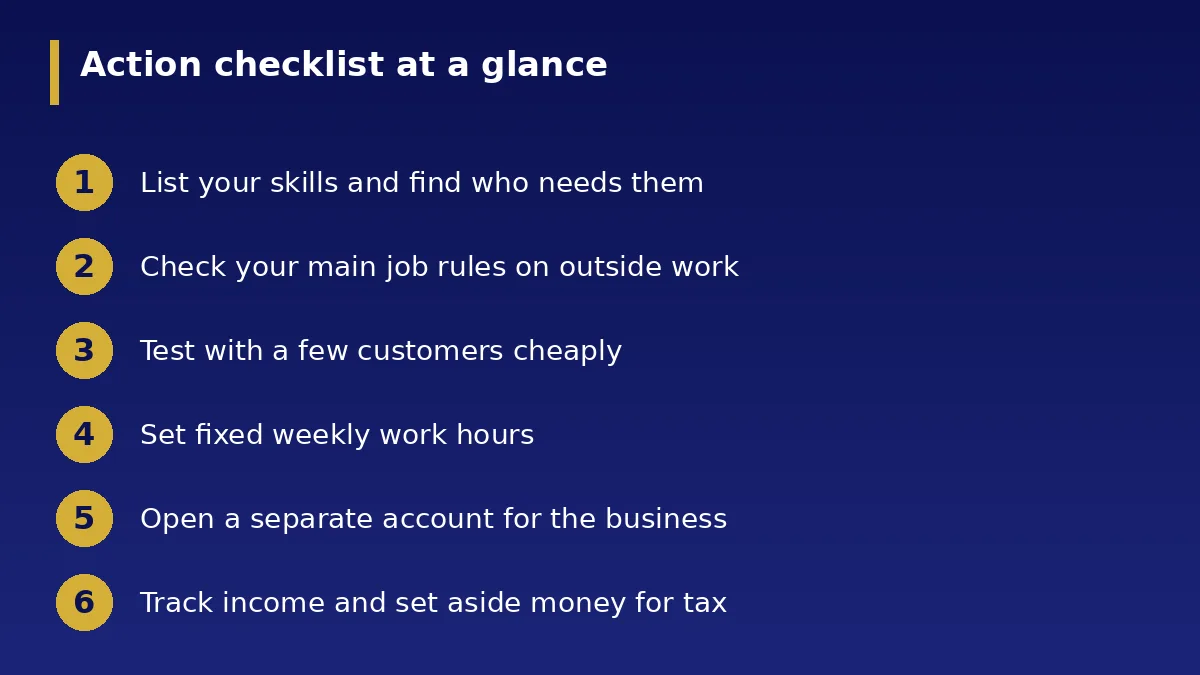
- List your skills and find who needs them
- Check your main job rules on outside work
- Test with a few customers cheaply
- Set fixed weekly work hours
- Open a separate account for the business
- Track income and set aside money for tax