
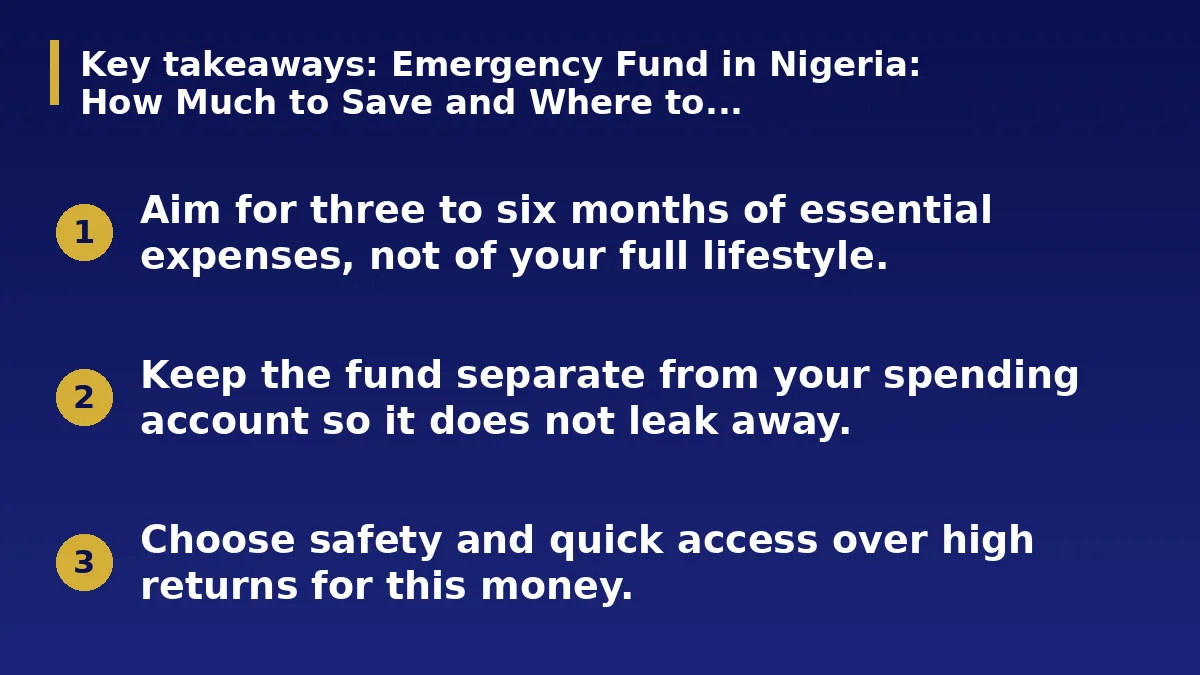
- Aim for three to six months of essential expenses, not of your full lifestyle.
- Keep the fund separate from your spending account so it does not leak away.
- Choose safety and quick access over high returns for this money.
The Short Answer
An emergency fund is money set aside only for shocks: a sudden medical bill, a job loss, a broken laptop you need for work or a family emergency. A good starting target is three to six months of essential expenses. If your income is irregular, such as freelancing, trading or gig work, lean towards six months or more.
The word essential matters. Count rent, food, transport, data, school fees, bills and minimum debt payments. Do not count holidays, new clothes or eating out. Your target is what it costs to stay stable, not to live comfortably.
How to Work Out Your Number
Add up one month of essential costs. Use your last three months of bank and mobile money statements, not memory, because most people underestimate what they spend. Multiply the monthly figure by three for a basic target and by six for a safer one.
Then set a small first goal. One month of expenses is a real win and protects you from most small shocks. Reaching it quickly keeps you motivated for the next stage.
Where to Keep It
Use three tests: is it safe, can you reach it within a day, and is it separate from daily spending. A savings account at a licensed bank or a regulated money market option usually meets all three. Check that the provider is licensed and that deposits are covered by the relevant insurance scheme.
Avoid putting emergency money into things that can lose value or lock you in, such as speculative assets, informal schemes or anything with a long withdrawal delay. The goal of this money is to be there, not to grow fast.
How to Build It on an Irregular Income
Pay yourself first. When money arrives, move a fixed percentage into the fund before you spend anything. Even five percent of each payment adds up over a year. In good months, add extra to cover the lean ones.
Use automatic transfers where your bank allows them. Decisions you do not have to repeat are the ones you keep making. Name the account something plain like Emergency Only so you think twice before touching it.
Rules for Using It
Write down what counts as an emergency before you need one. A good test is: is it unexpected, is it necessary and can it not wait. A sale or a party fails the test. A hospital bill passes it.
When you use the fund, refill it as your next priority. Treat the refill like a bill. Until it is back to target, pause extra spending goals so you are not exposed twice in a row.
A Worked Example
Suppose your essential costs are 250,000 naira a month. A three-month fund is 750,000 naira and a six-month fund is 1,500,000 naira. That can feel impossible at first, so break it into stages: 250,000 for the first month, then 500,000, then the full target.
If you save 50,000 naira a month, the first stage takes five months and the three-month target takes fifteen. If you can raise that to 75,000 by trimming one or two expenses or adding side income, you reach it in ten. The exact figures are yours; the method is to turn a big number into a monthly habit.
Common Mistakes to Avoid
The biggest mistake is mixing the fund with spending money. When it sits in the same account as your daily cash, it quietly disappears. The second is dipping into it for planned things like holidays or festive spending. Plan those separately in a sinking fund.
Another mistake is chasing high returns with emergency money. A promised monthly return that looks far above normal bank rates should make you cautious, because high returns come with real risk of loss. Finally, do not wait for the perfect month to begin. A small start beats a perfect plan that never begins.
Action Checklist
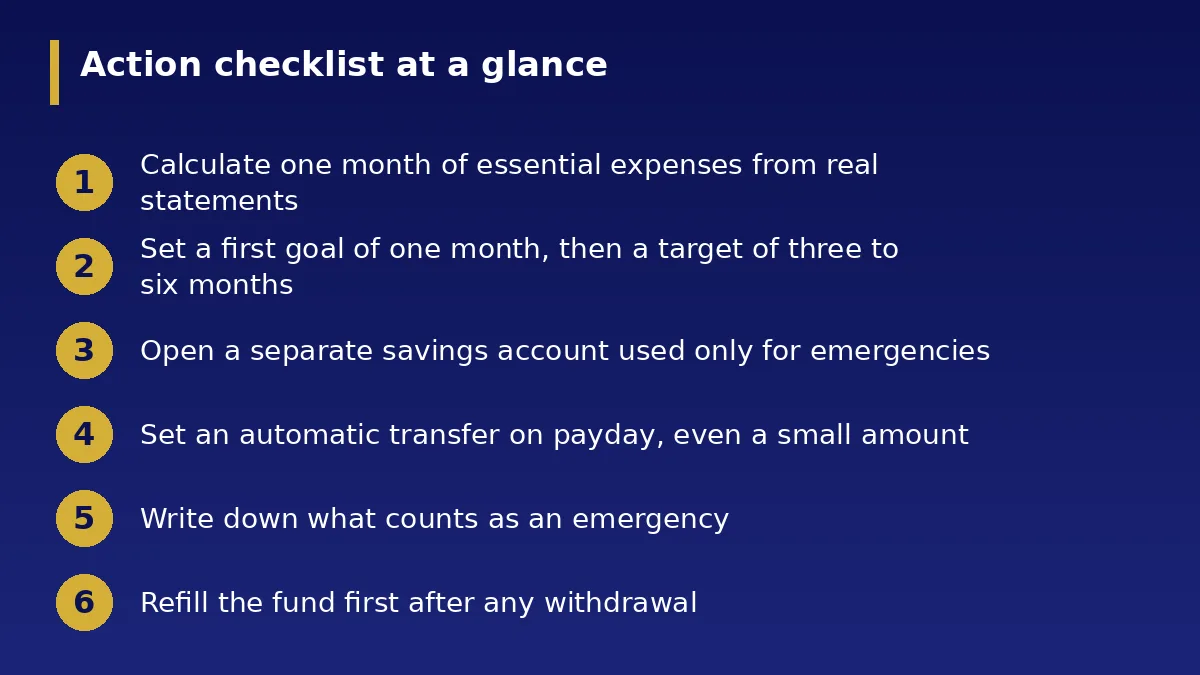
- Calculate one month of essential expenses from real statements
- Set a first goal of one month, then a target of three to six months
- Open a separate savings account used only for emergencies
- Set an automatic transfer on payday, even a small amount
- Write down what counts as an emergency
- Refill the fund first after any withdrawal