
- Never sign a management deal without a lawyer reading it first.
- Agree commission, length, scope and exit terms in plain words.
- Both sides are protected by clear money, duties and a fair way out.
The Short Answer
A management contract defines the relationship between an artist and a manager: what the manager does, what they earn, how long it lasts and how it ends. Vague deals cause the worst disputes. This is general information, so each party should take independent legal advice.
Parties and Scope
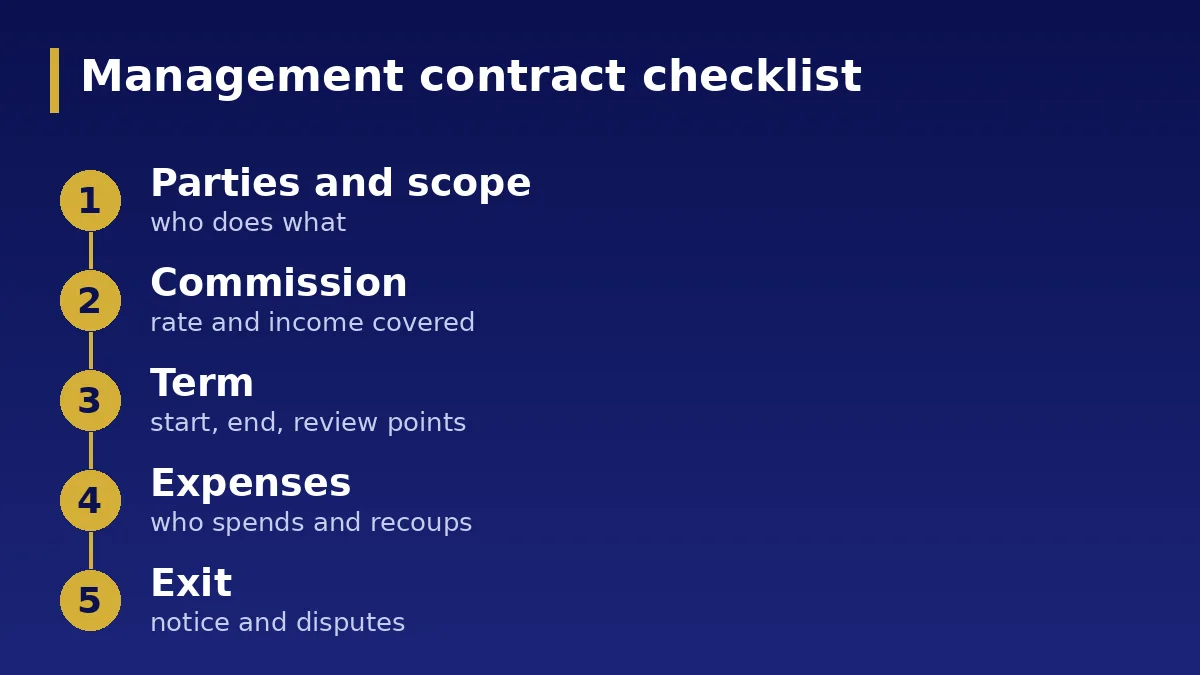
The contract should name the artist and the manager (or company) and say exactly what the manager will handle, such as career planning, bookings, deals and brand work. It should say whether the manager is exclusive and which territories it covers.
Be specific about what is outside the scope, such as legal work, which a lawyer should handle.
Commission
Commission is usually a percentage of the artist income that the manager helps generate. Agree the percentage, which income streams it covers, whether it is calculated before or after costs and what happens to income from deals made before the contract.
Beware of clauses that take a share of everything forever, without limits.
Term and Performance
Set a clear start and end date, with a renewal only if both sides agree. Many deals include targets, such as a number of releases or shows, with a right to review if they are not met.
A shorter first term with the option to extend protects both sides while trust is built.
Expenses and Money Handling
State which costs the manager can spend and recoup, how approvals work and a spending limit above which the artist must agree. Explain how money is collected, whether through the artist or the manager, and how often statements are shared.
Keep receipts and review accounts regularly.
Ending the Deal
The contract should say how either side can end it, the notice period, what happens to commission after the end and who owns the work done during the term. Include a fair process for disputes, such as discussion, mediation, then court.
Record everything in writing, and keep a signed copy safe.
A Simple Example
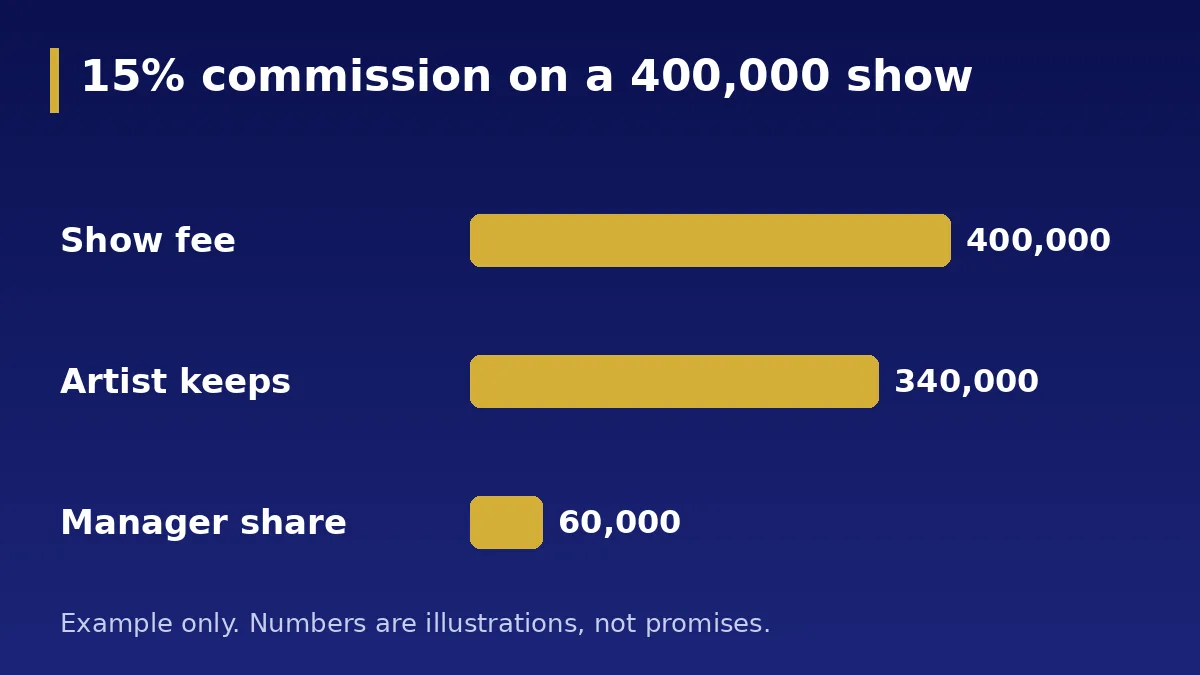
Suppose an artist and manager agree on a commission of fifteen percent of income from shows, brand deals and streaming for two years. If a show pays 400,000 naira, the manager share is 60,000 and the artist receives 340,000, before agreed costs. If the contract does not say whether costs come off first, each side may assume a different amount.
Clear examples written into the contract prevent arguments.
Red Flags for Artists
Be careful if you are asked to sign quickly, if the contract is long but vague, if commission applies to all income forever, or if the manager refuses to let a lawyer review it. Be careful too if you cannot see the money coming in or approve large spending.
A fair manager welcomes clarity and will explain every clause.
Red Flags for Managers
Managers should watch for artists who will not commit to a clear term, who sign other deals without telling them or who refuse to share income information. Make sure your work is protected if a major deal is signed during the term.
Record all agreements and updates in writing, and keep a clear account of work done.
Action Checklist
- Have a lawyer read the draft before signing
- Define the scope of work in writing
- Agree the commission rate and income covered
- Set a clear term and review points
- List who can spend what and how it is recouped
- Include notice and exit terms for both sides